
What Shoppers Should Know Before They Check Out During The Row’s Discount Period
The Row label rarely discounts, and in the rare instance it happens, the drop takes place quietly. You won’t find no attention-grabbing banner, no countdown timer, no email blast shouting “50% off.” The house’s handling of price reductions reflects its approach to design: understated, purposeful, and easy to miss if you are not watching closely. If you are those keeping an eye on a row sale in 2026, the most important detail to grasp is that patience and timing matter more than luck.
Mary-Kate and Ashley Olsen launched The Row, and the label built its reputation around pared-back cuts, restrained tones, and leather goods engineered rather than simply sewn. It’s precisely this reputation that makes sale windows to move so fast. Quantities are deliberately restricted — compared with most luxury houses, The Row turns out smaller production runs — so once a style is discounted, it may disappear within days, occasionally within hours, especially in popular sizes and neutral colorways like black, ecru, and tan.
When The Row Really Gets Discounted
The Row typically limits markdowns to two periods — an interim markdown around June-July, and a more extensive year-end sale in December-January — in contrast to mass-market high-end names that launch seasonal markdowns four or five times a year. These are not set-in-stone dates — they move a little year to year according to inventory levels — though customers who have followed the label over multiple seasons say this pattern staying fairly steadily into 2026.
Retailers carrying The Row, including multi-brand luxury sites, sometimes run their own promotional cycles independent of the brand’s direct site. This means a row sale on a third-party retailer might appear before or after The Row’s own markdown period. Checking multiple authorized stockists rather than relying on a single source increases the odds of catching a discount on the exact piece you want.
Full-price loyalists also highlight that select products seldom go on sale. Signature bags with the highest demand — most notably items belonging to the Margaux line — tend to the row leather shoulder bags stay at full price even in designated sale windows, because need for them constantly outpaces the limited supply. Outerwear pieces and blazers are discounted more consistently than the label’s signature bag styles.
Row Bags Rundown: Which Ones Are Truly Worth the Investment
Any row bags overview has to start with construction. The Row’s leather goods use vegetable-tanned and semi-aniline leathers sourced primarily from Italian tanneries, finished with hand-applied edge paint rather than machine-stitched binding. That detail alone explains part of the price point — hand-finishing takes longer and costs more than automated production, and it shows in how the edges age over years of use rather than fraying within months.
Among top row bags, three names resurface repeatedly in the secondhand market and styling roundups: the Margaux, the Sofia, and the Everyday Tote. Each serves a different purpose, and understanding those differences matters more than chasing whichever style is trending on social media that week.
- The Margaux bag is offered in a range of sizes (commonly referenced as Margaux 12, 15, and 17) and is structured enough to maintain its silhouette on a shelf, making it a go-to option for shoppers seeking a bag that reads as put-together even half-empty.
- Featuring the Sideby and N/S Park styles, The Row’s tote bag offerings lean softer and slouchier, designed for daily carry instead of showcasing, favoring less internal structure and more relaxed silhouettes.
- Smaller crossbody and clutch styles from the brand rotate more frequently and are often the pieces that do appear in markdown periods, since they carry lower production costs and higher turnover.
Why shoppers regard The Row differently from other luxury handbag brands comes down largely to resale value. Well-kept pieces, particularly the Margaux, often hold 60-75% of retail value on the secondary market — owing to limited output and steady demand, per consignment platforms that monitor luxury handbag pricing. Rather than matching most contemporary luxury labels, that value-holding pattern looks more like what you’d expect from Hermès or Chanel.
The Best Places to Buy The Row Margaux Bag At the Right Price
The question of where to buy The Row Margaux bag comes up constantly, and the honest answer is: it depends on your priorities. The Row’s own site and flagship boutiques offer the most reliable authentication and the best chance at pre-order access for new colorways, but they almost never discount the Margaux specifically.
Approved multi-brand retailers — the kind that carry a curated slice of The Row’s collection alongside other contemporary and luxury labels — sometimes receive limited Margaux stock ahead of a broader release. Even when The Row’s direct channels stay firm on price, such sellers sometimes include the Margaux in their own promotional events, giving persistent shoppers a chance at genuine savings of 10-20%.
Consignment and resale platforms focused on authenticated luxury goods are the third route, and they’re worth exploring carefully. A well-cared-for Margaux in a classic colorway can appear on resale marketplaces for 20-30% below original retail, particularly if it’s a size or color that fell out of favor. As a tradeoff, you face longer wait times to find the right piece and need to confirm authentication credentials before purchasing.
Buyers should be wary of unusually steep discounts from unfamiliar sellers. A Margaux listed at 50% off retail from a site with no verifiable authentication process is a red flag, not a bargain. The Row’s limited production numbers make counterfeits a real risk in this price bracket, and the brand does not offer a public authentication service, which puts more responsibility on the buyer to vet the seller.
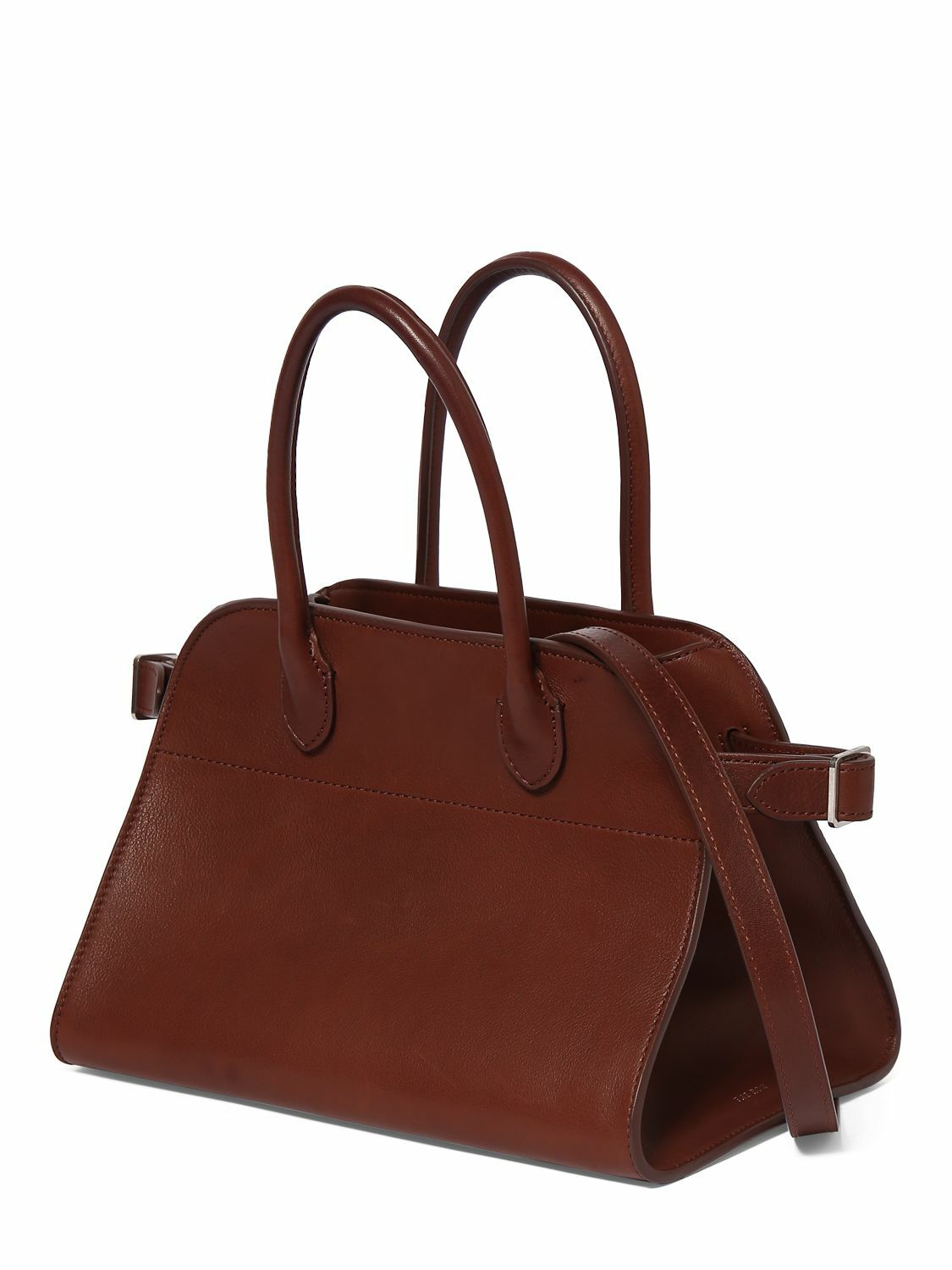
Breaking Down The Row’s Own Signature Handbag Silhouettes, Contrasted
Given that so much of the talk about the row bag range mostly comes down to comparing variants, a straightforward comparison brings into focus the true purpose behind each design.
| Bag Type | Works Best For | Shape & Support | Markdown Frequency |
|---|---|---|---|
| Margaux | Great for an investment buy and a firm-shaped daily bag | Solid, stands up without support | Hardly ever discounted, including in sale windows |
| Sideby Tote Bag | Best suited to the office grind while carrying documents and a computer | Soft-sided, it slouches when only lightly filled | Appears on sale from time to time, around the season’s midpoint |
| Sofia | Suited to night-time wear as well as a smaller day bag | Moderately structured | Periodic |
| N/S Park Tote design | Great for travel and carrying oversized daily essentials | Unstructured, it stretches as it’s loaded up | Turns up with some regularity at sale time, more frequently than others |
Because “row sale” searches frequently bundle every handbag silhouette together, this kind of comparison matters—in reality, the odds of a price cut differs widely by design line.
Larger carryalls and totes get discounted more frequently simply because they are made in slightly higher volumes than the Margaux.
How to Approach the 2026 Discount Schedule Wisely
For shoppers serious about catching The Row at a reduced price this year, a few practical habits make a measurable difference. Signing up for notifications at multiple authorized retailers rather than just the brand’s own site widens the net considerably, since stock allocation differs between channels.
Rather than scanning widely, keeping tabs on precise SKUs is helpful too. Since inventory changes on an hourly basis at high-traffic times across that broader listing, revisiting that specific page every few days during known sale windows is more effective than paging through that page — especially when a specific Margaux color-and-size combination is the target.
Staying open on size and color truly broadens the possibilities. Neutral shades like black and tan go out of stock quickest even at the full price, but seasonal or less common hues are more likely to turn up in a markdown because they move slower at first. Shoppers open to try a more unconventional shade typically land better availability and better discounts.
Finally, the state of the piece matter just as much when shopping secondhand as when buying new. Inspecting the corners, verifying the edge paint’s condition, and looking over the hardware for tarnish ahead of time guards against paying near-retail for a bag that needs to be restored. The Row’s leather holds up nicely over time, though only when it began in good condition.
For whoever is navigating the row fashion landscape this season, the overarching lesson is straightforward: the brand’s reserve around discounting is by design, so viewing a row sale as a rare event instead of a expected annual ritual will result in sharper, quicker decisions when the window opens.